How to Learn SolidWorks Fast in 2025 (Beginner’s Roadmap)
Introduction
If you’re just starting with SolidWorks, it can feel overwhelming.
There are hundreds of tools, dozens of menus, and countless tutorials online, but most of them are random. You open SolidWorks, click around, and hope it makes sense.
That’s why most beginners spend months stuck at the basics without making real progress.
The truth? Learning SolidWorks doesn’t have to take forever.
With the right roadmap, you can go from complete beginner to job-ready, certified, and confident in just a few months.
Here’s the roadmap I recommend if you want to learn SolidWorks fast in 2025.
Step 1: Master the Fundamentals
Before anything else, you need to build a solid foundation. These are the skills every SolidWorks user must know:
Sketching basics → fully defined sketches, relations, dimensions.
Part modeling → extrude, revolve, cut, fillet, chamfer.
Assemblies → adding mates, moving parts, simulating motion.
Drawings → creating 2D drawings from 3D models.
💡 Pro tip: Don’t move forward until you can build simple parts confidently without errors. This will save you time later when projects get more complex.
Step 2: Get Certified (CSWA & CSWP)
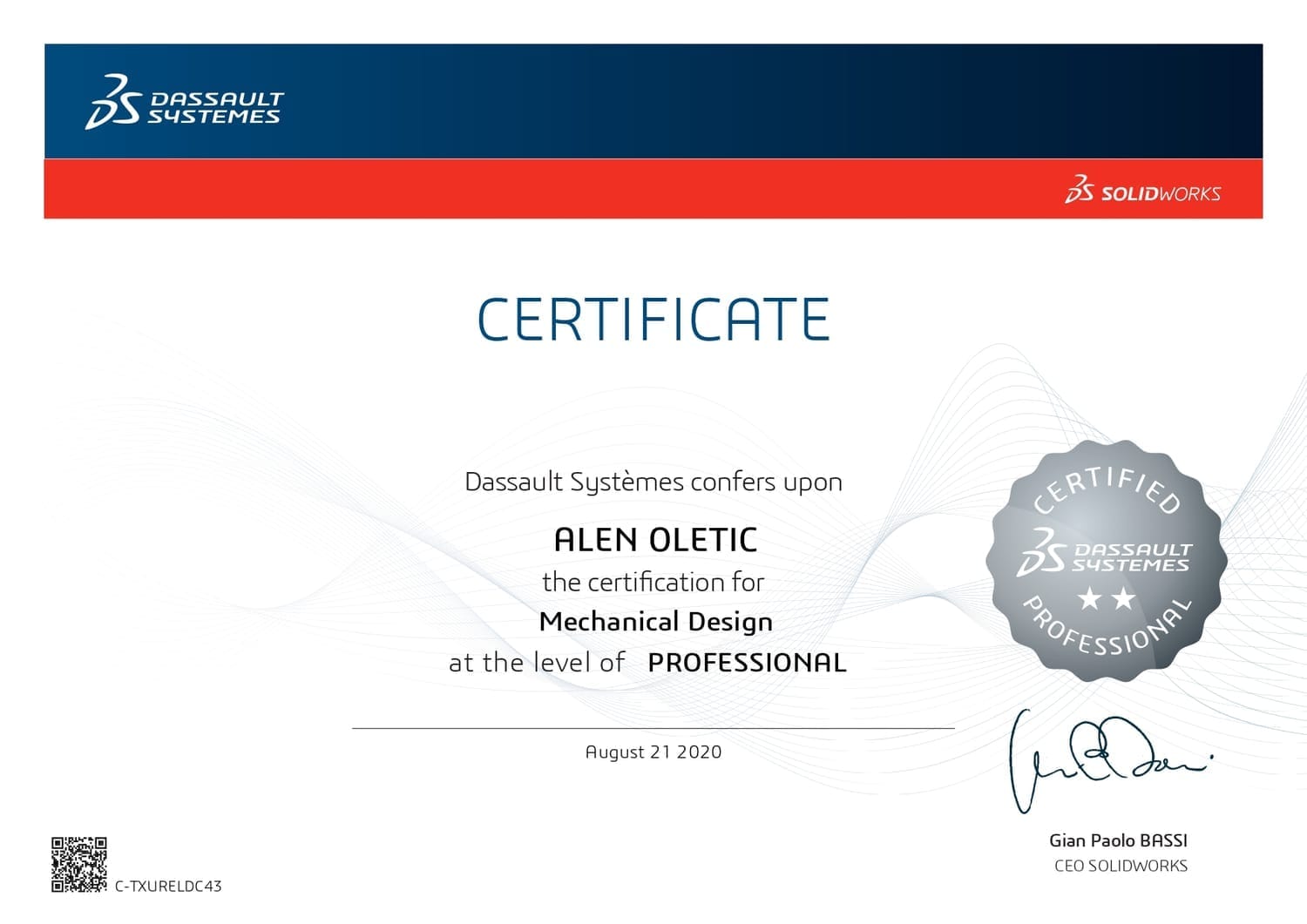
Your skills are important — but clients and employers can’t “see” them at first glance. That’s where certifications come in.
CSWA (Certified SolidWorks Associate) → shows you know the fundamentals and can pass an industry-recognized test.
CSWP (Certified SolidWorks Professional) → proves you’re in the top tier of users who can handle advanced, professional-level projects.
When a hiring manager or client sees “CSWP” on your resume or profile, they instantly know you’re not just another beginner.
These two certifications put you in the top 10–15% of SolidWorks users worldwide.
Step 3: Build a Portfolio
This is the step most beginners skip, and it’s the one that gets you hired.
A SolidWorks portfolio shows:
Projects you’ve designed (parts, assemblies, drawings).
Motion studies, animations, or FEA simulations.
Real-world examples, not just classroom exercises.
Even if you’re just starting, you can create practice projects that look professional. For example:
A bike frame assembly.
A sheet metal enclosure.
A 3D-printed part with a drawing.
With a portfolio, you instantly stand out from the thousands of “average” users who only say they know SolidWorks.
Step 5: Stay Ahead of the Curve
AI is changing engineering. Some repetitive CAD work will be automated.
But here’s the truth: only the best SolidWorks designers will survive.
If you’re certified, have a portfolio, and know advanced tools, you’ll be among the top 10% who thrive while others struggle.
Conclusion: Your Next Step
Learning SolidWorks fast isn’t about watching random YouTube tutorials. It’s about following a roadmap:
Master the fundamentals.
Get CSWA & CSWP certified.
Build a portfolio.
Learn advanced tools.
Stay ahead with continuous improvement.
If you want the fastest way to do this, I built the SolidWorks PRO Accelerator. Inside, you’ll master SolidWorks step by step, prepare for CSWA & CSWP, and build a portfolio that gets you hired.
The best time to start learning SolidWorks was yesterday. The next best time is today.
Let's get connected on socials


Drop your email address below to access the free course
Privacy policy | Terms of use | Cookies